
Treatments · Cataracts
Cataract Surgery
A safe and precise surgery in the hands of an internationally renowned surgeon. Remove the cataract and restore visual clarity.
★ 4.9 · 73 Google reviews · Dante 6, Anzures
The condition
What is a cataract?
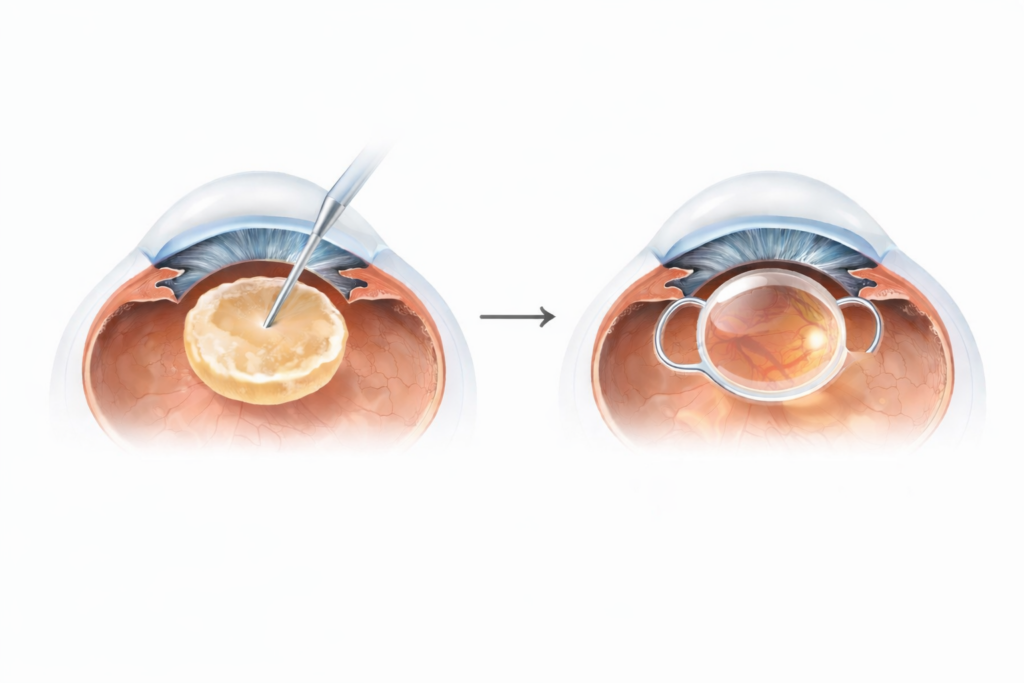
A cataract is the progressive loss of transparency of the eye’s natural lens, causing blurred vision, loss of contrast, and difficulty driving or reading.
The surgery involves replacing the clouded lens with a clear intraocular lens, restoring visual quality.
The symptoms
How do you know if you have cataracts?
Cataracts progress gradually and can go unnoticed at first. These are the most frequent symptoms:
- Blurred or “cloudy” vision, like looking through a veil
- Glare from lights when driving at night
- Faded or yellowish colours
- Difficulty reading or recognising faces
- Frequent changes in your glasses prescription
- Needing more and more light to read
If several of these symptoms sound familiar, a complete ophthalmological evaluation can confirm the diagnosis and help you decide, together with Dr. Ferreira, on the best time to treat it.
The surgical plan
Cataract surgery plan
A structured process, designed for your peace of mind and the best results.
Comprehensive evaluation
We perform a thorough assessment of your eye health using state-of-the-art technology. This includes precise biometric measurements of the eye, corneal topography, retinal evaluation, and a detailed analysis of your visual needs to determine the most suitable treatment.
Personalised plan
Based on the results of your evaluation, Dr. Ferreira designs a tailored surgical plan. Together, we select the most suitable intraocular lens according to your lifestyle, daily activities, and visual expectations—whether for distance vision, near vision, or both.
Outpatient surgery
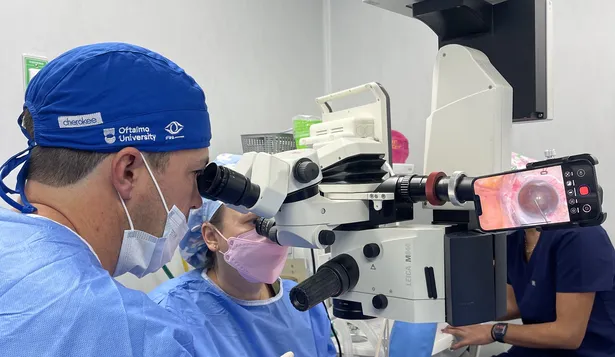
The procedure is performed on an outpatient basis, under topical anaesthesia, in a controlled, maximum-security environment. The surgery takes approximately 15 to 20 minutes per eye. Most patients notice a significant improvement in vision within the first few hours and can resume their normal activities within a few days.
Structured follow-up
After surgery, we schedule regular check-ups to monitor your progress and ensure visual stability. Dr. Ferreira personally oversees every stage of your recovery, ensuring that the results are optimal and long-lasting.
Premium lenses
Premium intraocular lenses: vision tailored to you
Cataract surgery is also an opportunity to correct other visual defects in the same procedure. During your evaluation, Dr. Ferreira analyses your lifestyle — work, screens, reading, night driving, sport — and clearly explains the options best suited to your case:
Monofocal
excellent quality of vision, usually optimised for distance.
Toric
corrects astigmatism.
Extended-range and multifocal
reduce dependence on glasses for both distance and near.
The choice is made together, based on precise measurements of your eye and your visual expectations.
Take the first step towards clear vision
Book an evaluation with Dr. Ferreira and find out which option is right for you.
Common questions
Frequently asked questions
Is cataract surgery painful?
No. It is performed under local anaesthesia and the procedure is generally well tolerated.
How long is the recovery?
Visual improvement usually begins within a few days, although full stabilisation may take a few weeks.
What type of intraocular lens is best?
It depends on each patient. The choice is based on visual needs, ocular anatomy, and expectations.
When should a cataract be operated on?
When it starts to affect your daily life: driving at night, reading, working or watching television clearly. There is no need to wait for the cataract to “mature”; today surgery is indicated based on your quality of life, and a full evaluation confirms the right timing.
Can a cataract come back after surgery?
No. The clouded lens is completely removed and the intraocular lens does not become opaque. Over time, some patients develop opacity of the capsule that holds the lens; it is resolved in minutes with a YAG laser, with no need for further surgery.