
Treatments · Laser surgery
Laser Surgery
Enjoy a life without glasses: correction of myopia, hyperopia and astigmatism using an excimer laser.
★ 4.9 · 73 Google reviews · Dante 6, Anzures
The technology
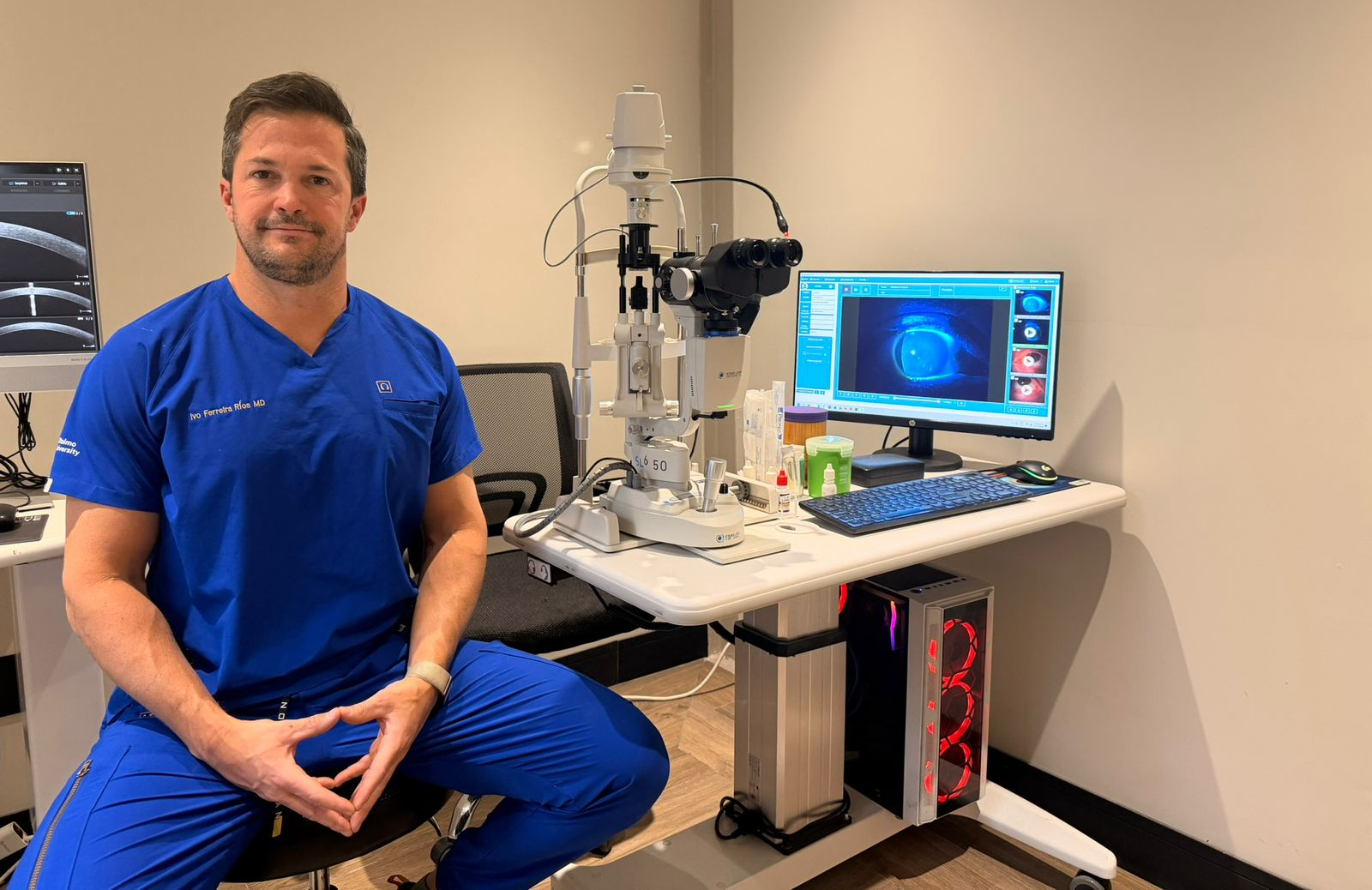
What is excimer laser?
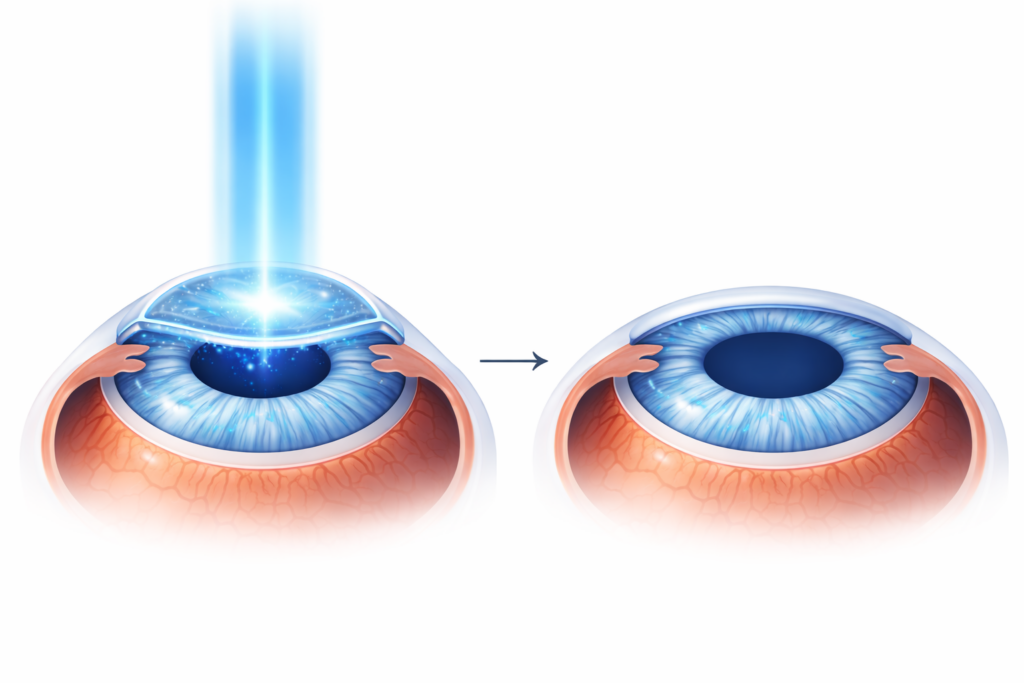
The excimer laser is a technology that reshapes the cornea with high precision to correct refractive errors such as myopia, hyperopia, and astigmatism. The goal is to improve visual quality and reduce dependence on glasses or contact lenses.
The key to success is not “just the laser”, but the correct candidate selection, pre-operative measurements, and a fully personalised surgical plan.
What it corrects
Myopia, hyperopia and astigmatism
Myopia
Difficulty seeing at a distance. The laser adjusts the corneal curvature to improve focus.
Hyperopia
Difficulty seeing up close (and sometimes at a distance). Focus is optimised by modifying the corneal shape.
Astigmatism
Distorted vision caused by corneal irregularity. The treatment aims to regularise focus.
Candidacy
Are you a candidate for laser eye surgery?
Successful refractive surgery starts with correct candidate selection. In general, you are a good candidate if:
- You have myopia, hyperopia or astigmatism
- Your prescription has been stable for at least a year
- You depend on glasses or contact lenses and want more freedom
- Your cornea has adequate thickness and shape (confirmed at your evaluation)
- You have no active eye disease
If the study shows the laser is not your best option, we tell you clearly and propose the right alternative for your case, such as phakic intraocular lenses or lens surgery.
The evaluation
The pre-operative evaluation
Before recommending laser surgery, we perform detailed measurements to confirm that the procedure is suitable for your eye and to define the most precise treatment.
Safety depends on variables such as corneal thickness, topography, tear quality, and refractive stability.
The personalised plan
Complete refractive study and prescription stability.
Topography and corneal analysis to plan the treatment profile.
Ocular surface evaluation (dryness, inflammation, tear quality).
Discussion of goals: habits, work, night driving, sports.
Recovery
Fast recovery and progressively sharper vision
The procedure is outpatient and takes just a few minutes per eye. In the first hours there may be mild discomfort — a gritty feeling or watering — which subsides quickly. Most patients return to work within two to three days and notice progressively sharper vision over the first weeks, with scheduled check-ups to support recovery.
Request a laser surgery assessment
If you want to correct myopia, hyperopia, or astigmatism and reduce your dependence on lenses, we can evaluate your case and clearly explain the best option for you.
Common questions
Frequently asked questions
Is everyone a candidate for excimer laser?
No. The indication depends on corneal measurements, refractive stability, and eye health. A prior assessment is essential to confirm safety.
When will I notice the visual improvement?
It depends on the technique and each patient’s eye. In general, there is progressive improvement in the first few days, with subsequent stabilisation.
Can laser surgery be associated with dry eye?
The ocular surface is always evaluated before the procedure. If dryness is present, it can be treated beforehand to improve comfort and results.
When can I get back to my routine?
Most patients resume their activities within two to three days, following the team’s instructions. Vision improves progressively from the first 24 to 48 hours.