
Presbyopia Surgery
Correction with premium intraocular lenses
Reduce dependence on reading glasses and regain comfort at near, intermediate, and distance vision
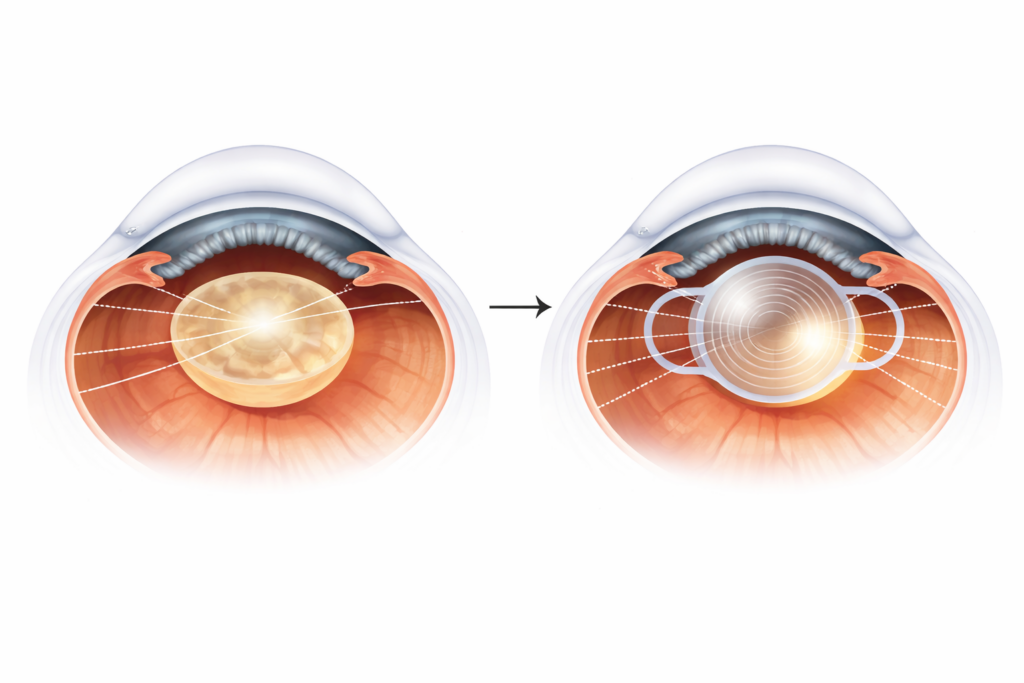
What is presbyopia?
Presbyopia (age-related farsightedness) is the progressive loss of the ability to focus up close, typically starting around the age of 40–45. It usually manifests as the need to hold text further away, eye fatigue, or increasing dependence on reading glasses.
There are different surgical strategies to improve vision at various distances. The key is choosing the right option for your eye and your lifestyle.
How we determine the best option for you
Your lifestyle
Reading, screen use, driving, sports, precision work… your daily routine sets the priorities.
Realistic expectations
We explain what can be achieved and what trade-offs may exist depending on the strategy.
Eye measurements
Assessment of the cornea, lens, visual quality, and ocular surface to make a precise choice.
Personalised plan
The strategy is designed to maximise visual comfort and long-term stability.

What to expect from the process
- Comprehensive assessment and clear explanation of alternatives.
- Strategy selection based on your visual goals.
- Outpatient procedure (as medically indicated).
- Planned follow-up to ensure stability and comfort.
When it comes to presbyopia, there is no “one-size-fits-all” solution. Success lies in personalisation.
Request a presbyopia assessment
If you find it uncomfortable to read or need glasses more and more often, we can evaluate your case and explain which option best fits your visual goals.
Frequently asked questions
Will I be able to stop wearing glasses completely?
It depends on the strategy and the individual case. During the consultation, we explain realistic goals and possible trade-offs for each option.
Is presbyopia surgery the same as cataract surgery?
They are different procedures, although they may share intraocular technology. The indication depends on the condition of the lens and the visual goal.
How long is the recovery?
It varies depending on the technique used and each patient. That is why planned follow-up is an essential part of the process.