“Being an excellent surgeon is easy.
Becoming and staying an excellent one is the hard part.”
Dr. Ivo Ferreira
In ophthalmology, and especially in microsurgery, many things today feel upside down.
We talk constantly about technology, new platforms, premium lenses, surgical efficiency, artificial intelligence, and better outcomes. And of course, all of that matters. We need technology. We need innovation. We need better tools.
But sometimes, in the middle of all this progress, we forget the most important question:
What kind of surgeon are you really trying to become?
That is the question behind everything we do at Oftalmo University.
Because becoming an excellent surgeon is not only about learning a technique. It is not only about getting access to the operating room. It is not only about buying better technology or doing more cases. It is about understanding the final objective, building the right path to get there, and accepting where you are starting from.
And the final objective should always be excellence.
But excellence is often misunderstood. Excellence is not ego. It is not arrogance. It is not speed. It is not doing the highest number of cases. It is not believing that you already learned everything you needed to learn.
For me, excellence begins with humility.
It begins with a growth mindset. With the ability to say: I can still improve. I can still measure myself. I can still receive feedback. I can still adapt to new technology. I can still change the way I do things if that allows me to become better for my patients.
This is where many surgeons get stuck.
They learned a technique, repeated it for years, and slowly became comfortable. And comfort is a dangerous place when the world around us is changing. New technology requires new thinking. Better outcomes require better systems. Modern microsurgery requires more than experience. It requires structure, metrics, reflection, feedback, and continuous training.
That is why we say that many things are upside down.
Because many surgeons want excellence without a roadmap. They want performance without training. They want confidence without mentorship. They want results without metrics. They want to improve, but without stepping outside their comfort zone.
And in microsurgery, that is not enough anymore.
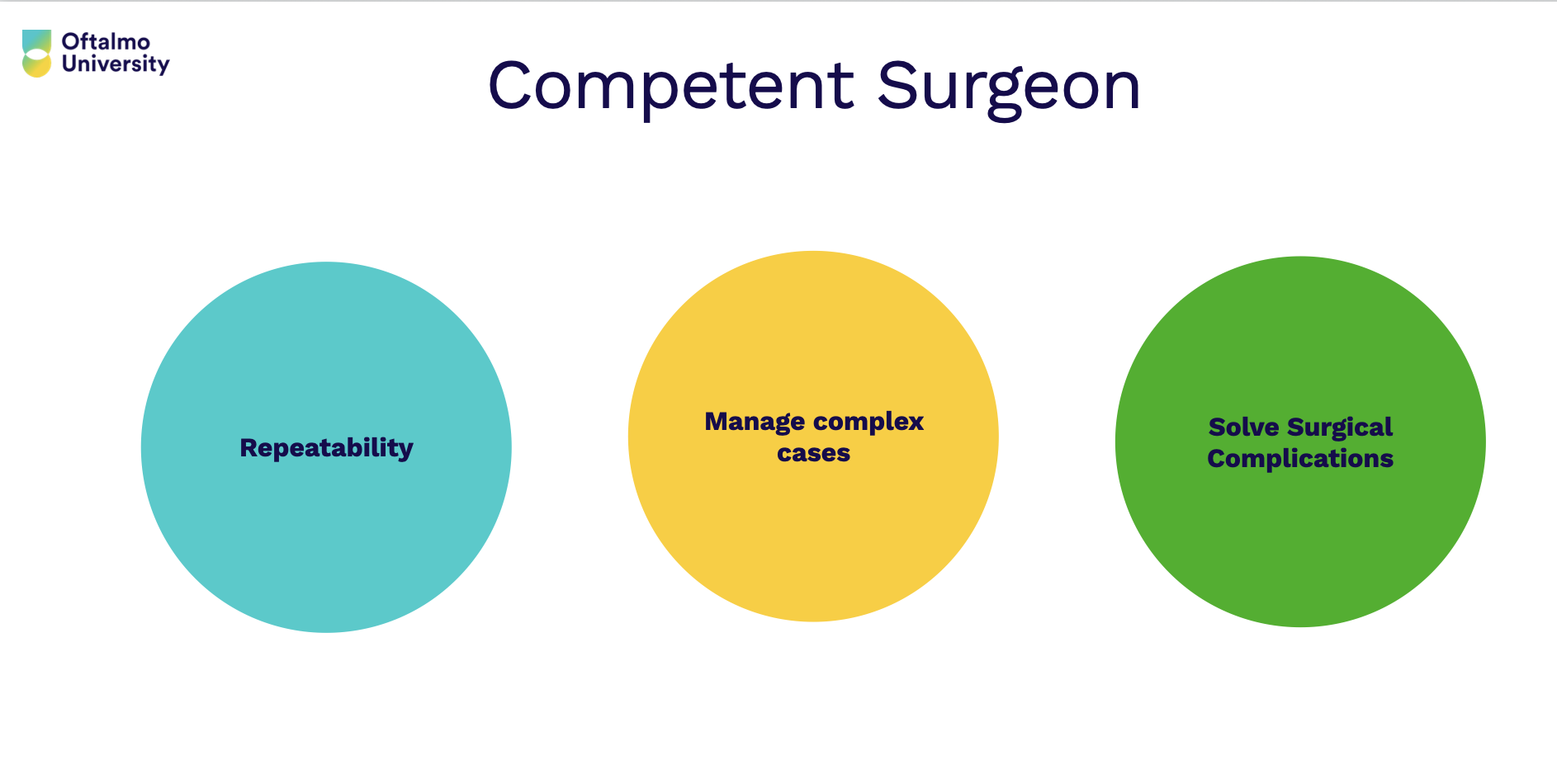
Before talking about excellence, we need to talk about competence. Because competence is also misunderstood. A competent surgeon is not only someone who can repeat a procedure when everything is easy. A competent surgeon has to be repeatable, reliable, capable of managing complexity, and prepared to face complications.
Many surgeons are repeatable. They can perform the same step many times when the case is standard. But when the anatomy changes, when the cataract is harder, when the capsule behaves differently, when the chamber becomes unstable, when the patient moves, or when the unexpected appears, everything changes.
That is where real competence is tested.
And complications are a very specific challenge. They happen with low frequency. Because they do not happen every day, we may slowly lose our ability to manage them at a high level. If we do not train for complications, if we do not simulate them, if we do not rehearse our decision-making, then we are leaving one of the most important parts of surgical performance to chance.
This is why simulation is not only for beginners.
Simulation is for anyone who wants to become competent. And also for anyone who wants to stay competent. It is for the surgeon who understands that rare events require repeated preparation. It is for the surgeon who respects the fact that patients deserve our best version before, during, and after the operation.
At Oftalmo University and our entire microsurgical training team and community, we train the surgeon in three dimensions.
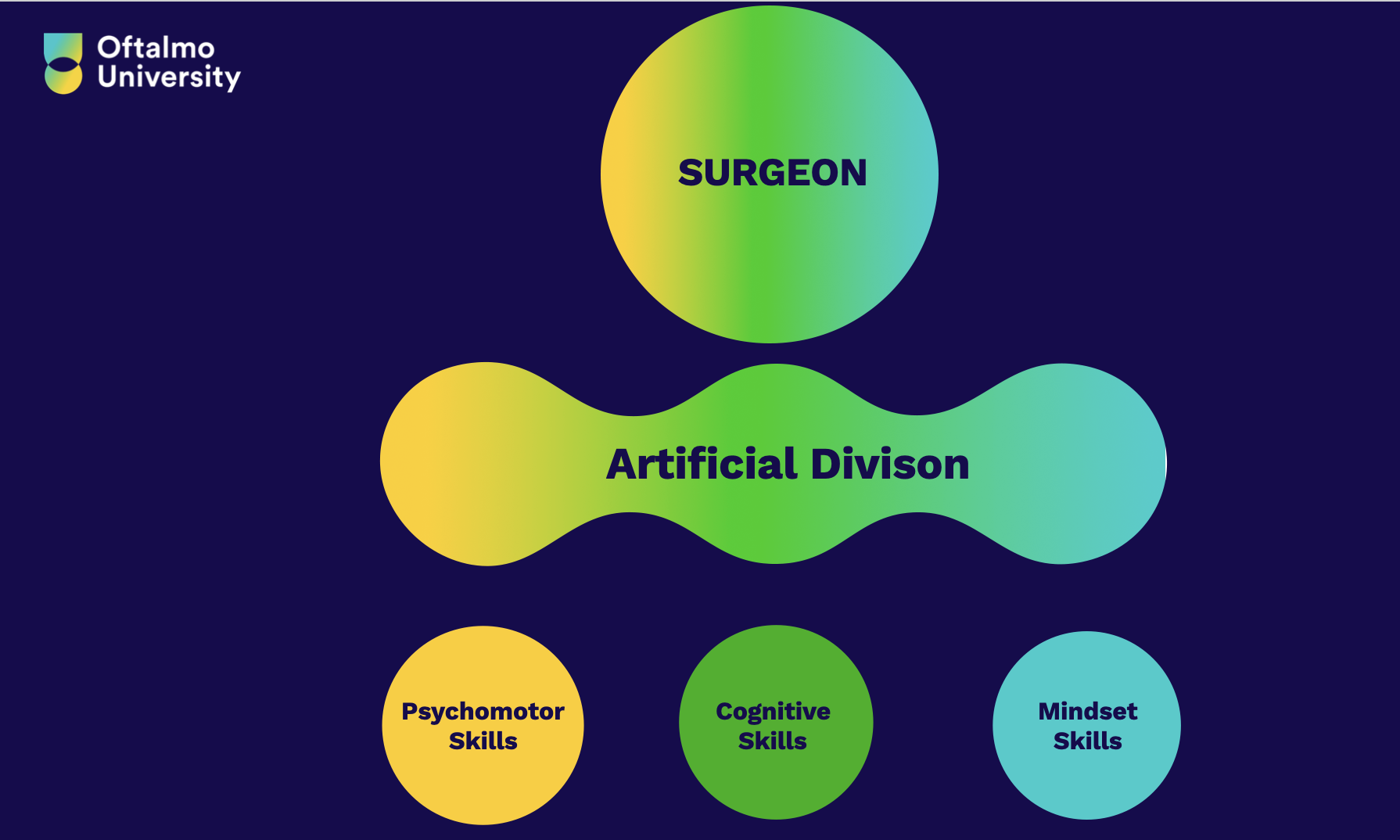
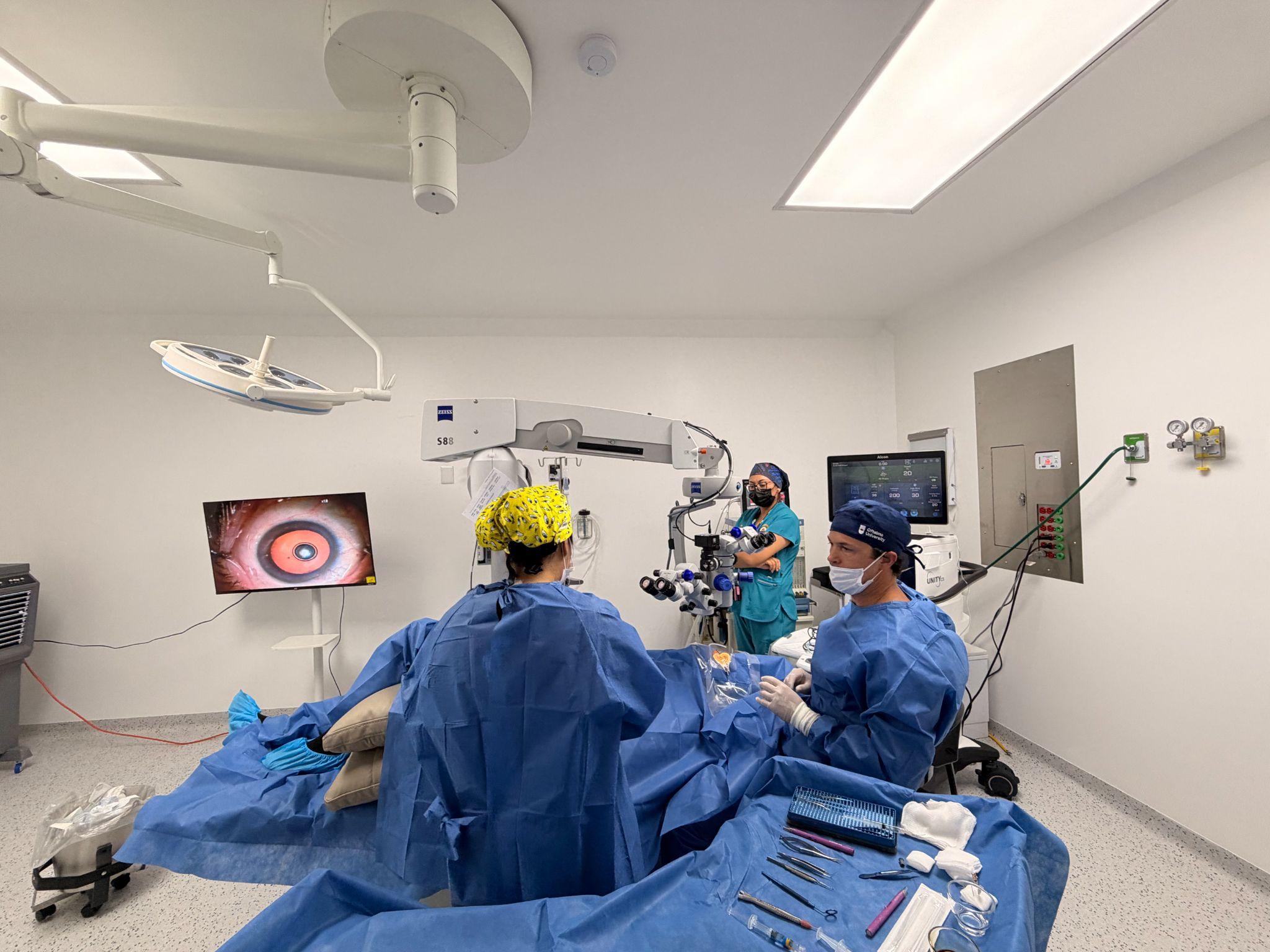
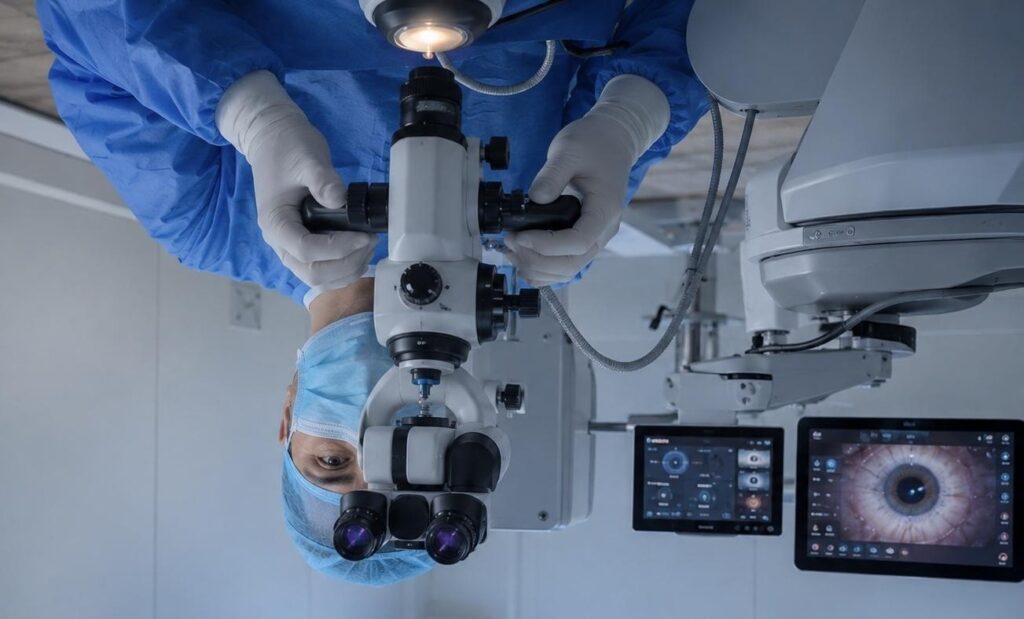
The first is the psychomotor dimension. Microsurgery requires fine motor control, hand stability, foot pedal discipline, spatial awareness, and the ability to synchronize your hands, your eyes, your microscope, and your machine. These skills need hours of flight. They need repetition. They need practice. They need an environment where you can fail, adjust, repeat, and improve without putting a patient at risk.
The second is the cognitive dimension. Surgery is not only movement. Surgery is decision-making under pressure. You need to know what to do, but also when to do it, why to do it, and what to do when the plan changes. You need algorithms. You need mental models. You need to understand the eye as a dynamic environment. You need to read what is happening in real time and make decisions with clarity.
The third is the mental dimension. This is probably the least discussed part of surgical education, but it may be one of the most important. Surgery demands focus, resilience, emotional control, and mental toughness. We need to learn how to manage anxiety, how to recover from difficult cases, how to receive feedback, how to speak with colleagues, and how to keep improving without being destroyed by pressure.
This is also part of becoming and staying excellent.
And this is why the path matters so much.
The path to excellence cannot be improvised. It needs structure. It needs milestones. It needs benchmarks. It needs objective feedback. It needs a clear progression from basic tasks to more complex tasks, then to advanced scenarios, then to high-complexity situations, and finally to complications.
This is not very different from aviation or high-performance sports. Nobody expects a pilot to learn only during a real emergency with passengers on board. Nobody expects an elite athlete to improve only during the final match. They train before. They repeat. They measure. They receive feedback. They work with coaches. They simulate pressure. They prepare for the moment of performance.
In surgery, we should think the same way.
The operating room is a performance environment. It is where we execute. It is where preparation is tested. But the operating room should not be the only place where we learn.
The training environment is different. It is where you can slow down. It is where a mentor can stop you, correct you, and help you see what you cannot see yet. It is where you can repeat a gesture until it becomes precise. It is where you can train complications before they happen in a real patient. It is where you can transform feedback into improvement.
This is why the mentor is essential.
In my opinion, one of the first decisions of anyone who wants to become a surgeon should be to find a real mentor. A mentor is not only someone who teaches a trick or shows a technique. A mentor helps you build judgment. A mentor helps you develop discipline. A mentor helps you understand your blind spots. A mentor helps you build a surgical identity.
Because surgery is not only a skill. Surgery is a way of thinking.
And surgical knowledge is procedural knowledge. You cannot learn it only by listening. You have to learn by doing. With your hands, with your eyes, with your mind, and with your emotions. That is why methodology matters. We need adult learning principles. We need active learning. We need deliberate practice. We need immediate feedback. We need progressive difficulty. We need simulation. We need reflection.
This is the ecosystem we are building at Oftalmo University.
Not just a course. Not just a simulator. Not just a training session.
An ecosystem where surgeons and future surgeons can understand where they are, where they want to go, and what they need to train to get there.
And then comes the beginning.
Many young ophthalmologists say: “I will start training when I have more surgical opportunities.”
I believe this is another upside-down idea.
You should not wait for the opportunity to begin training. You should train so that when the opportunity arrives, you are ready.
Start now.
Take responsibility for your surgical future now.
Start with the fundamentals. Learn how to hold instruments. Learn how to move inside the eye. Learn how to respect tissue. Learn how to use your foot pedal. Learn how to understand fluidics. Learn how to think before moving. Learn how to be coachable. Learn how to receive feedback. Learn discipline. Learn patience. Learn how to improve one step at a time.
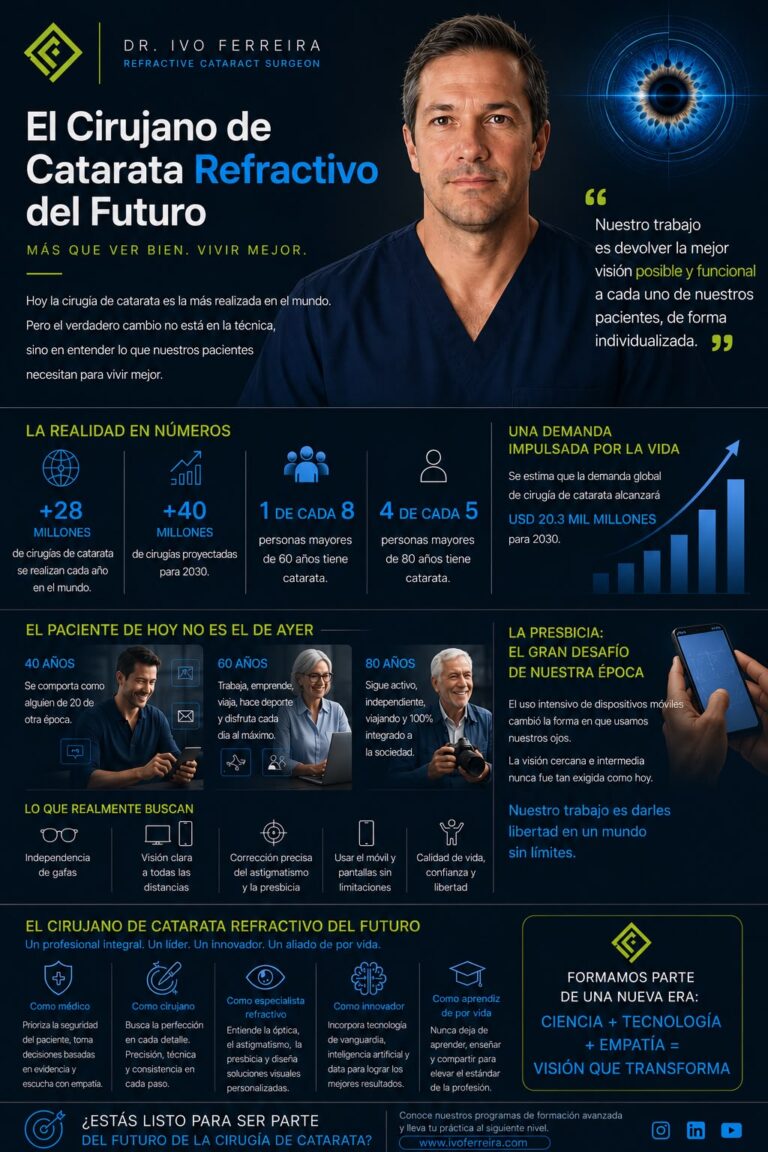
The future will need more cataract surgeons. The population is aging. The demand for cataract surgery will continue to grow. Technology will become more advanced. Patients will expect better visual outcomes, faster recovery, and a more personalized surgical experience.
Cataract surgery is one of the most beautiful and impactful procedures in medicine. It restores vision. It improves quality of life. It gives people back independence, confidence, and dignity.
But the question is not only whether the world needs more surgeons.
The real question is whether you are willing to become the kind of surgeon your patients deserve.
For most ophthalmologists, the answer is yes. Most can become excellent surgeons. But not by accident. Not only by watching. Not only by waiting. Not only by repeating the same mistakes in silence.
You need training. You need structure. You need simulation. You need metrics. You need feedback. You need mentors. You need mental strength. And above all, you need the humility to understand that investing in yourself is not optional.
Many doctors invest in technology, congresses, equipment, clinics, and marketing. But sometimes we struggle to invest in our own development.
And there is no more powerful investment than investing in your surgical skills, your judgment, your mindset, and your future.
Because every serious hour of training becomes part of the surgeon you will be when you are in front of a patient.
At Oftalmo University, our mission is to help surgeons and future surgeons walk that path with structure, world-class mentors, simulation, metrics, discipline, and a clear methodology.
We are not here only to teach a technique.
We are here to help build better surgeons.
Surgeons who think better. Surgeons who decide better. Surgeons who move better. Surgeons who recover better. Surgeons who keep improving.
Maybe everything does feel upside down.
But maybe that is also the opportunity.
Maybe this is the moment to stop waiting. Maybe this is the moment to train differently. Maybe this is the moment to take responsibility for your own surgical future.
Because being an excellent surgeon may look easy.
But becoming and staying an excellent one is the hard part.
And that path starts with one decision.